Rome wasn't built in a day — and you certainly can't see it all in one either. But after guiding thousands of visitors through the Eternal City, our team has narrowed down the ancient sites that leave the biggest impression. These are the ten landmarks that tell the story of Rome's rise, glory, and enduring legacy.
1. The Colosseum
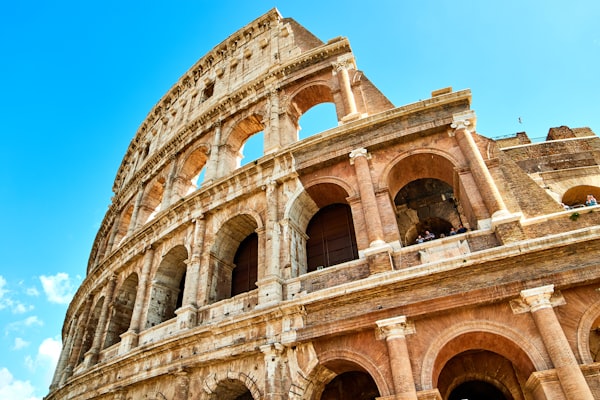
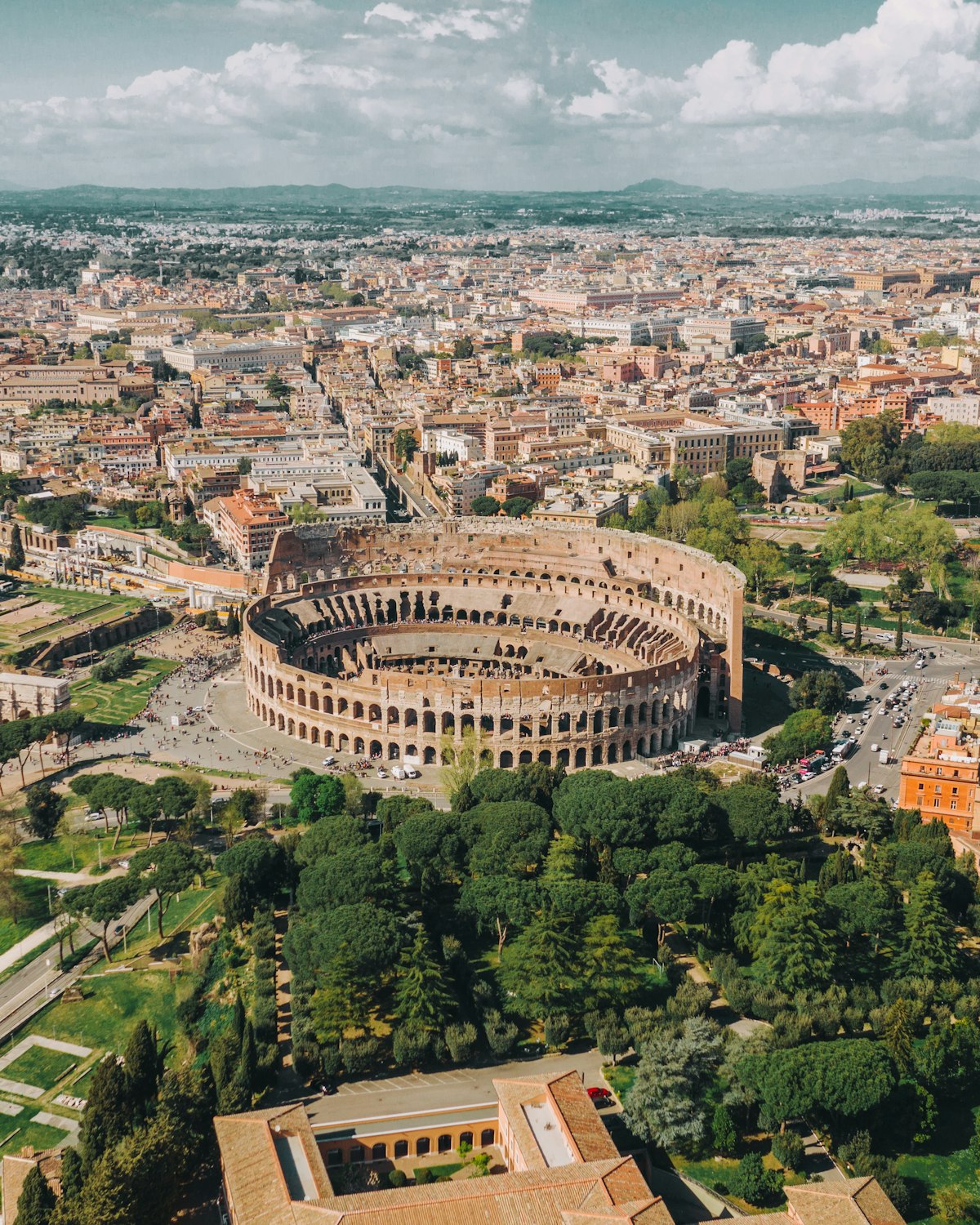
No list of ancient Rome could start anywhere else. The Flavian Amphitheatre, built between 70 and 80 AD, once held up to 80,000 spectators for gladiatorial contests, animal hunts, and public spectacles. Stand outside its towering travertine walls and you can almost hear the roar of the crowd. Our tip: visit during the golden hour for photographs that capture the warm stone at its most dramatic. The underground levels, opened to visitors in recent years, reveal the ingenious engineering that powered the spectacles above.
2. The Pantheon
Nearly two thousand years old and still standing with the world's largest unreinforced concrete dome, the Pantheon is an engineering marvel that makes modern architects jealous. Step inside and look up — the oculus, a 9-metre opening at the top, floods the interior with a column of light that shifts throughout the day. Originally a temple to all the gods, it was converted to a Christian church in 609 AD, which is likely why it survived the centuries so well. Entry is free, though reservations are now required. Arrive early in the morning when the light is at its most magical.
3. The Roman Forum
This sprawling rectangle of ruins between the Palatine and Capitoline hills was the beating heart of the Roman Republic and Empire. Temples, basilicas, triumphal arches, and the Senate House all stood here. Walking the Via Sacra — the same path where triumphant generals paraded — is one of the most powerful experiences in Rome. Look for the Temple of Saturn, the Arch of Septimius Severus, and the House of the Vestal Virgins. A combined ticket with the Colosseum gives you access.
4. Trajan's Column
Rising 30 metres above the ruins of Trajan's Forum, this marble column tells the story of Emperor Trajan's military campaigns in Dacia through a continuous spiral frieze of over 2,600 carved figures. It's essentially a Roman comic strip wrapped around a column — and it's been standing since 113 AD. The level of detail is extraordinary: soldiers building bridges, crossing rivers, and engaging in battle. A statue of St. Peter was placed on top in 1587, replacing the original of Trajan himself.
5. Piazza Navona
Built on the footprint of Emperor Domitian's 1st-century stadium, Piazza Navona retains the elongated oval shape of the ancient racetrack. Bernini's Fountain of the Four Rivers commands the centre, flanked by the Church of Sant'Agnese in Agone. The piazza is one of Rome's most lively public spaces — street artists, outdoor cafes, and an atmosphere that hasn't changed much in centuries. Look down at the foundations below the northern end to see the original stadium arches.
See 8 of these sites in one walk
Our morning tour covers Piazza del Popolo, Pantheon, Piazza Navona, Castel Sant'Angelo and more. Book your free spot →
6. Castel Sant'Angelo
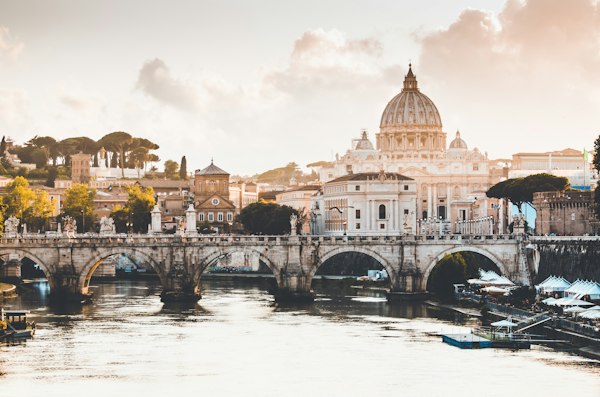
Originally built as Emperor Hadrian's mausoleum in 139 AD, this towering cylindrical fortress has served as a papal residence, prison, and military stronghold over the centuries. Connected to the Vatican by a secret passageway (the Passetto di Borgo), it was the pope's escape route during sieges. Today you can walk to the top for one of the best panoramic views of Rome, with St. Peter's dome framed perfectly across the Tiber. Cross the Ponte Sant'Angelo — lined with Bernini's angel sculptures — for the full approach.
7. Capitoline Hill
The smallest of Rome's seven hills but arguably the most important, the Capitoline was the political and religious centre of ancient Rome. Michelangelo redesigned the piazza at its summit in the 16th century, creating the trapezoidal Piazza del Campidoglio flanked by the world's oldest public museums — the Capitoline Museums. Climb the Cordonata stairway at sunset for a view that stretches across the Forum below. Don't miss the bronze equestrian statue of Marcus Aurelius at the centre (a replica — the original is inside the museum).
8. Arch of Constantine
Standing right next to the Colosseum, this triumphal arch was erected in 315 AD to celebrate Emperor Constantine's victory at the Battle of Milvian Bridge. It's the largest surviving Roman triumphal arch and a fascinating example of "architectural recycling" — many of its decorative reliefs were taken from earlier monuments honouring Trajan, Hadrian, and Marcus Aurelius. The arch marks the starting point of the Via Triumphalis, the route of ancient Roman victory parades.
Experience ancient Rome at golden hour
Our evening twilight walk takes you through the Colosseum, Trajan's Column, Capitoline Hill, and more at golden hour. Join the twilight walk →
9. Piazza del Popolo
This grand oval piazza at the northern gate of Rome has been the first impression of the city for travellers arriving from the north for centuries. At its centre stands an Egyptian obelisk from the 13th century BC — one of the oldest objects in Rome. The twin baroque churches of Santa Maria dei Miracoli and Santa Maria in Montesanto frame the entrance to Via del Corso, while the Pincian Hill terrace above offers sweeping views across the piazza to St. Peter's dome. Our morning tour starts right here, and for good reason — the history begins the moment you step through the gate.
10. Porta del Popolo
The northern gateway to the city, Porta del Popolo was once part of the ancient Aurelian Walls. Its outer facade was redesigned by Bernini in 1655 to welcome Queen Christina of Sweden. For centuries this was the first thing travellers saw when they entered Rome along the Via Flaminia. The gate frames Piazza del Popolo perfectly, and standing beneath its arch you get a sense of the drama that awaited every new arrival. It's the ideal starting point for understanding how Rome presented itself to the world — and it's where our walking tours begin their journey through the city.
Each of these sites tells a chapter of Rome's 2,700-year story. You could spend a lifetime studying any one of them, but even a single afternoon walking among them — with the right guide to bring the stones to life — can transform how you see the Eternal City.